
Auto Body Shop Tips: How Road Salt Affects Your Car’s Exterior

If you live in Montreal, you already know two things are guaranteed every winter: the cold… and the mountain of road salt covering every street, highway, and parking lot from December to April. Road salt is essential for safety—it melts ice, improves traction, and keeps our snowy city moving.
But while it protects drivers, it can be surprisingly harsh on your vehicle. From corrosion to dull paint, salt quietly eats away at your car’s exterior if left unchecked. And that’s exactly why knowing how salt works—and how to prevent damage—is one of the best things you can do for your vehicle’s long-term health.
Whether you're a seasoned winter driver or new to snowy conditions, this guide breaks down everything you need to know about road salt and its impact on your car, with tips straight from the perspective of an auto body shop. You’ll discover how salt causes damage, how to protect your car, and what to do if corrosion has already started.
Let’s dive in!
Why Road Salt Is Both a Hero and a Villain
Before understanding how to protect your vehicle, it’s useful to know what road salt actually does—and why it’s both incredibly helpful and surprisingly destructive.
The Science Behind Road Salt: Why Montreal Uses So Much
Road salt (most commonly sodium chloride) is spread on streets to lower the freezing point of water.
When the temperature drops, salt helps melt ice and prevents it from re-forming—making winter roads dramatically safer.
Why Montreal uses large quantities of salt:
Rapid freeze-thaw cycles
Heavy snow accumulation
Constant vehicle traffic compacting snow into ice
Bridges and overpasses freezing faster
While it's a winter hero, road salt is also a chemical that accelerates oxidation, which leads to rust.
How Road Salt Starts Damaging Your Vehicle's Exterior
Salt alone doesn’t immediately damage your car—it's the combination of salt + moisture + metal that creates the perfect storm for rust.
Here’s how it happens:
Salt sticks to your car’s exterior
Moisture activates the salt, making it corrosive
The chemical reaction breaks through clear coat
Bare metal becomes exposed
Corrosion grows under the paint
Rust eventually becomes visible
This process happens slowly at first, then accelerates—especially under the vehicle.
Why an Auto Body Shop Can Spot Salt Damage Before You Do
You might not notice early corrosion, but a trained professional at an auto body shop can.
Experts check areas like:
Wheel wells
Rocker panels
Bumpers
The underside of panels
The edges of doors and tailgates
The frame and suspension components
These hidden zones often hold salt long after winter ends, making spring inspections especially important.

The Hidden Ways Road Salt Damages Your Car’s Exterior
Salt damage isn’t always obvious at first. Sometimes the real problems happen quietly under the surface, where you won’t see them until it's too late.
Road Salt and Your Paint: A Slow and Steady Breakdown
Paint is your car’s first line of defense—but salt weakens clear coat over time.
Effects of salt on your paint:
Dull appearance
Micro-scratches that collect dirt
Peeling or bubbling clear coat
Oxidation underneath the paint
Discoloration in extreme cases
Even if your car looks clean, salt often sticks in crevices that are hard to rinse without proper pressure washing.
Why Salt Loves the Undercarriage (and Why That’s a Problem)
Your undercarriage gets the worst of winter because it constantly gets splashed with salty slush.
The areas most vulnerable:
Brake lines
Exhaust system
Frame and support structure
Suspension components
Fuel lines
Corrosion in these areas isn’t just cosmetic—it can affect safety, performance, and long-term value.
The Domino Effect: How Small Salt Damage Turns Into Big Problems
Salt damage rarely stays isolated. Once corrosion forms, it spreads.
For example:
A small paint chip becomes a rust bubble
A rust bubble becomes a crack
A crack becomes a hole
Moisture enters and accelerates deterioration
Left untreated, even a tiny spot of corrosion can become a costly repair.
This is why many Montreal drivers schedule spring inspections at their local auto body shop—to catch the early signs before they grow.

How to Protect Your Car from Road Salt Damage
Good news: while salt is unavoidable, you can protect your vehicle with consistent care and a few smart habits.
Wash Your Car… But Wash It Properly
Not all car washes are created equal. Winter washing requires more strategy, not just frequency.
Best practices:
Wash your car every 10–14 days in winter
Choose a wash that includes a high-pressure undercarriage spray
Make sure the car dries fully to avoid moisture lingering
Don’t wash in extreme cold to avoid freezing doors and locks
A simple wash goes a long way in reducing salt buildup.
Apply a Protective Wax or Sealant Before Winter
One of the easiest ways to protect your paint is adding a barrier before the season starts.
Benefits include:
Stronger resistance to salt and grime
Better hydrophobic (water-repelling) performance
Protection against micro-scratches
Longer-lasting shine
Many drivers underestimate how effective a good sealant is—especially when recommended by a trusted auto body shop.
Inspect High-Risk Areas Regularly
During winter, check salt-prone zones often, especially after storms or slush-heavy days.
Key spots to inspect:
Wheel wells
Rocker panels
Lower doors
Rear hatch/trunk edges
Bumper undersides
Undercarriage connections
Early detection is the best defense against corrosion.
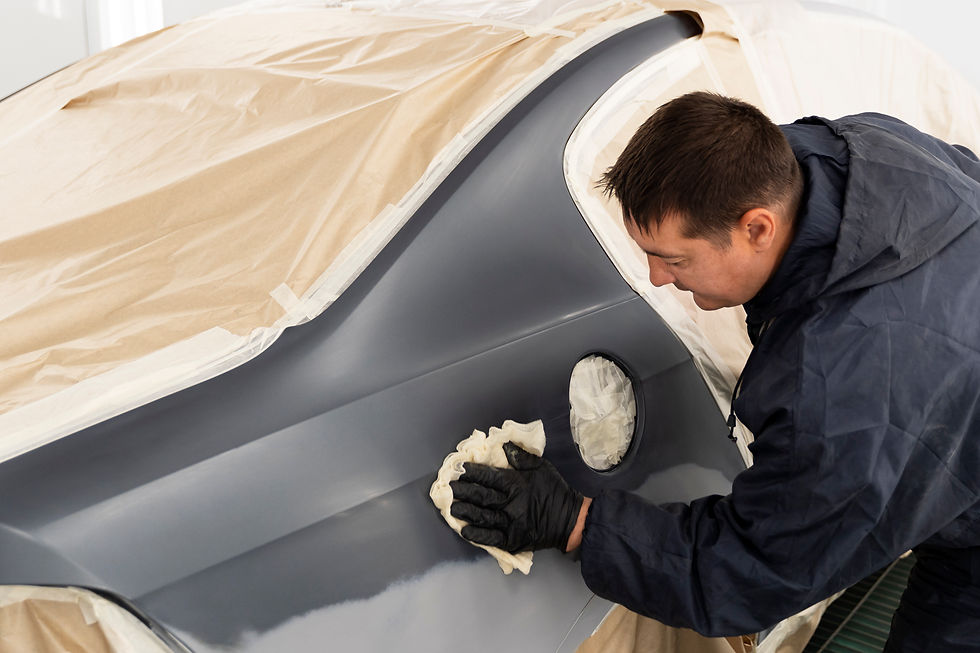
Fixing Salt Damage — What You Can Do and When to Call an Auto Body Shop
If salt has already started affecting your car, the next step is knowing what repairs are possible—and when professional help is necessary.
Minor Salt Damage You Can Handle at Home
Light corrosion can sometimes be treated with DIY care.
Possible at-home solutions:
Touch-up paint for chips
Clay bar cleaning for contaminated surfaces
Rust converters for small surface spots
Waxing and polishing for dull areas
These methods help, but only if damage is minimal and hasn’t spread under the paint.
Moderate Salt Damage: When It’s Time for a Professional Inspection
Some damage requires an expert eye.
Signs you should visit an auto body shop:
Paint bubbling
Deep scratches or chipped edges
Visible rust spots near wheel wells
Rust around door seams
Rough texture under the surface
Corrosion under the vehicle
Professionals can assess whether the damage is purely cosmetic or affecting structural components.
Severe Salt Damage: What Full Repairs Look Like
If corrosion is advanced, more extensive work may be needed.
Possible repairs include:
Sanding and refinishing
Full paint correction
Panel repair or replacement
Rust removal and sealing
Undercarriage restoration
Anti-corrosion coating
This level of work shouldn’t be delayed—severe corrosion spreads faster than most drivers realize, especially in Montreal’s climate.
Conclusion: Protect Your Car, Protect Its Value
Road salt is a necessary part of winter driving in Montreal, but it doesn’t have to ruin your vehicle’s exterior. With the right habits—regular washing, inspections, protective coatings, and prompt repairs—you can keep your car looking great and prevent long-term corrosion.
If you ever notice early signs of salt damage or want a professional inspection for peace of mind, Park Lane Collision is a trusted local auto body shop in Montreal. Their team can help assess, repair, and protect your vehicle so it stays strong through every winter season.
Stay safe, stay proactive, and show your car a little winter love—it will thank you in spring!


